Events organized or actively participated in by the Work Package 6 team.
Explore the public-facing activities connected to HRJust’s climate work package, from academic conferences and civil society workshops to summer schools and international roundtables. The archive below highlights where the project has engaged across Europe and beyond.
Bridging Research and Society: Reflections on Human Rights and Civil Society Engagement
This online conference marked the closing milestone of the HRJust-Intersect Observatory, an innovative Horizon Europe initiative that monitored how human rights justifications are used to respond to intersecting global challenges such as climate change, the Covid-19 pandemic, and migration.
By bringing together researchers, policy-makers, practitioners and civil society actors, the event demonstrated how the Observatory’s “living lab” approach translated research into accessible outputs — including policy papers, video blogs and seminars — grounded in real-world needs and intersectional perspectives.
The conference also highlighted how continuous dialogue with civil society enhanced transparency, accountability and inclusive governance, and how this co-created knowledge supported evidence-based human rights practices across Europe and beyond.


First Edition of the Summer School “Inclusion and Sustainability in Vulnerability (ISV): A Transdisciplinary Approach”
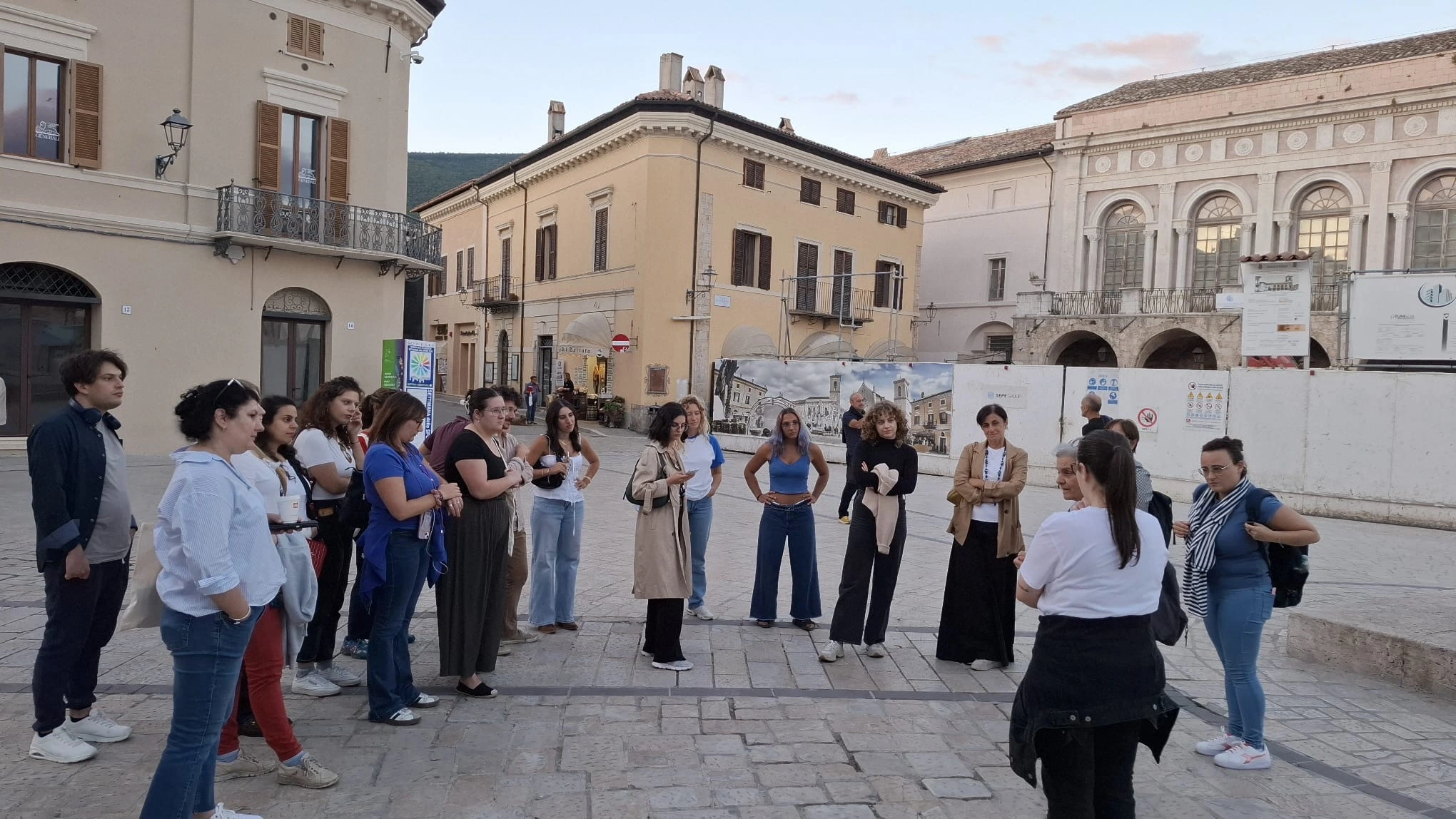
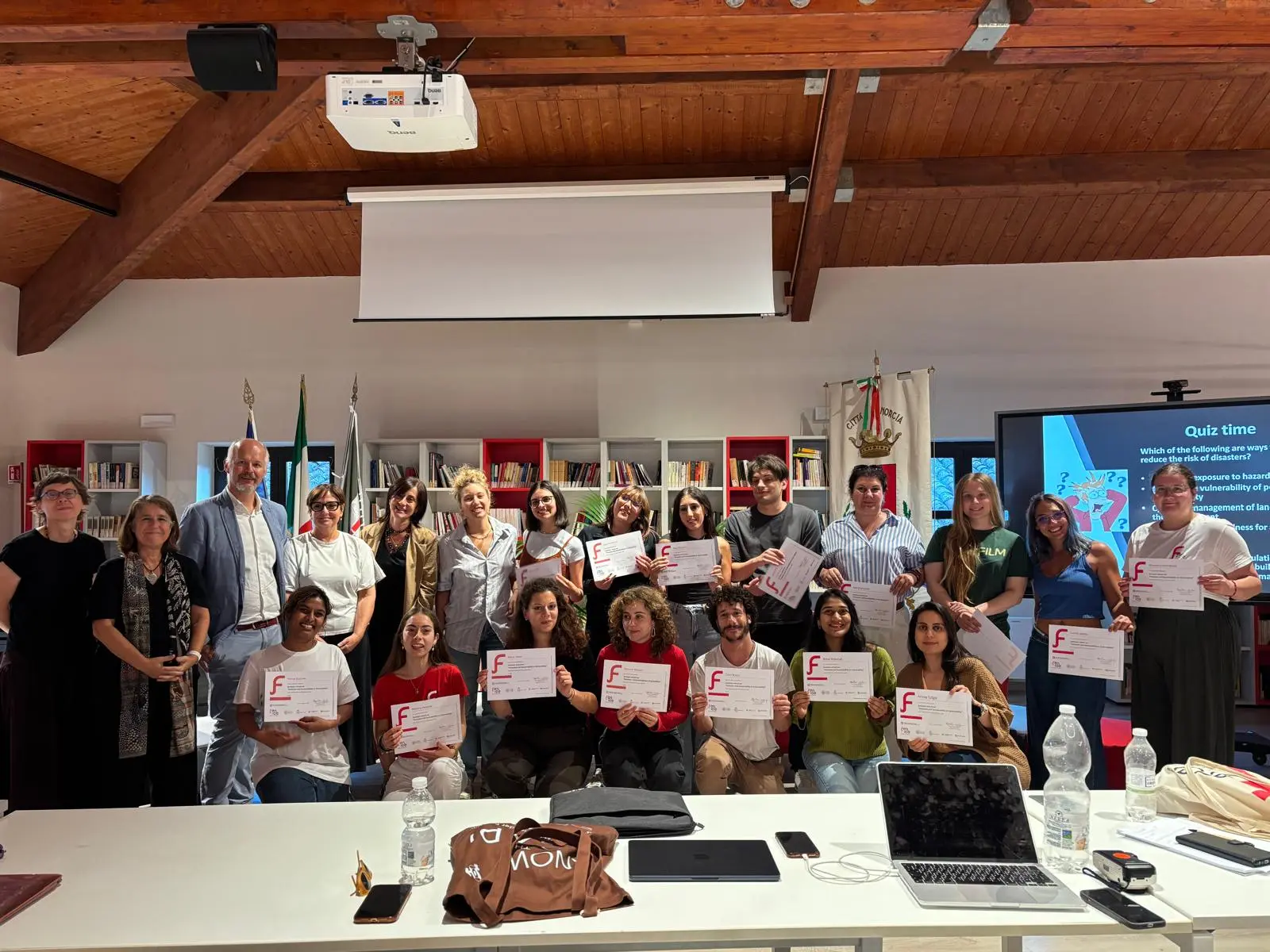
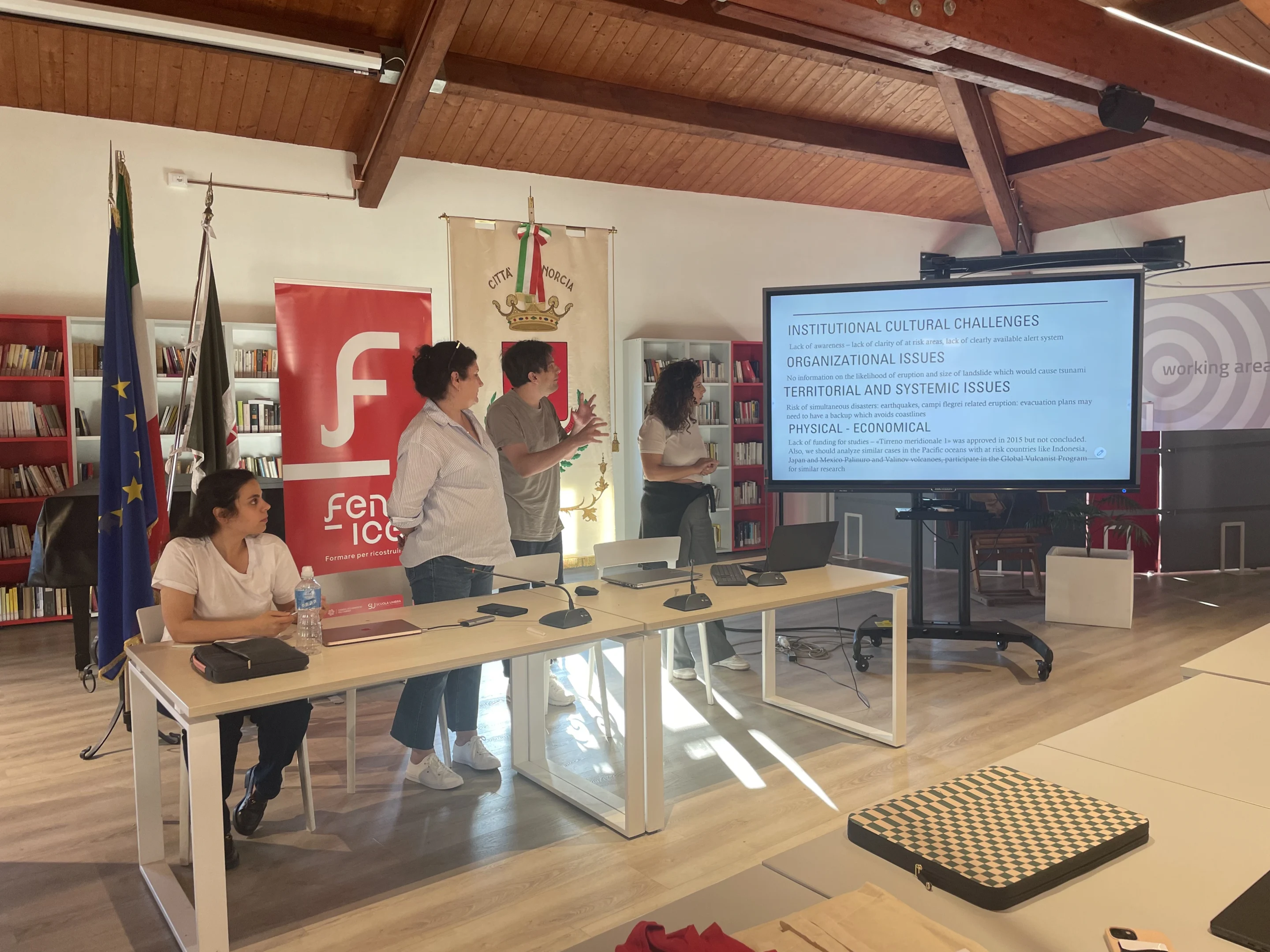
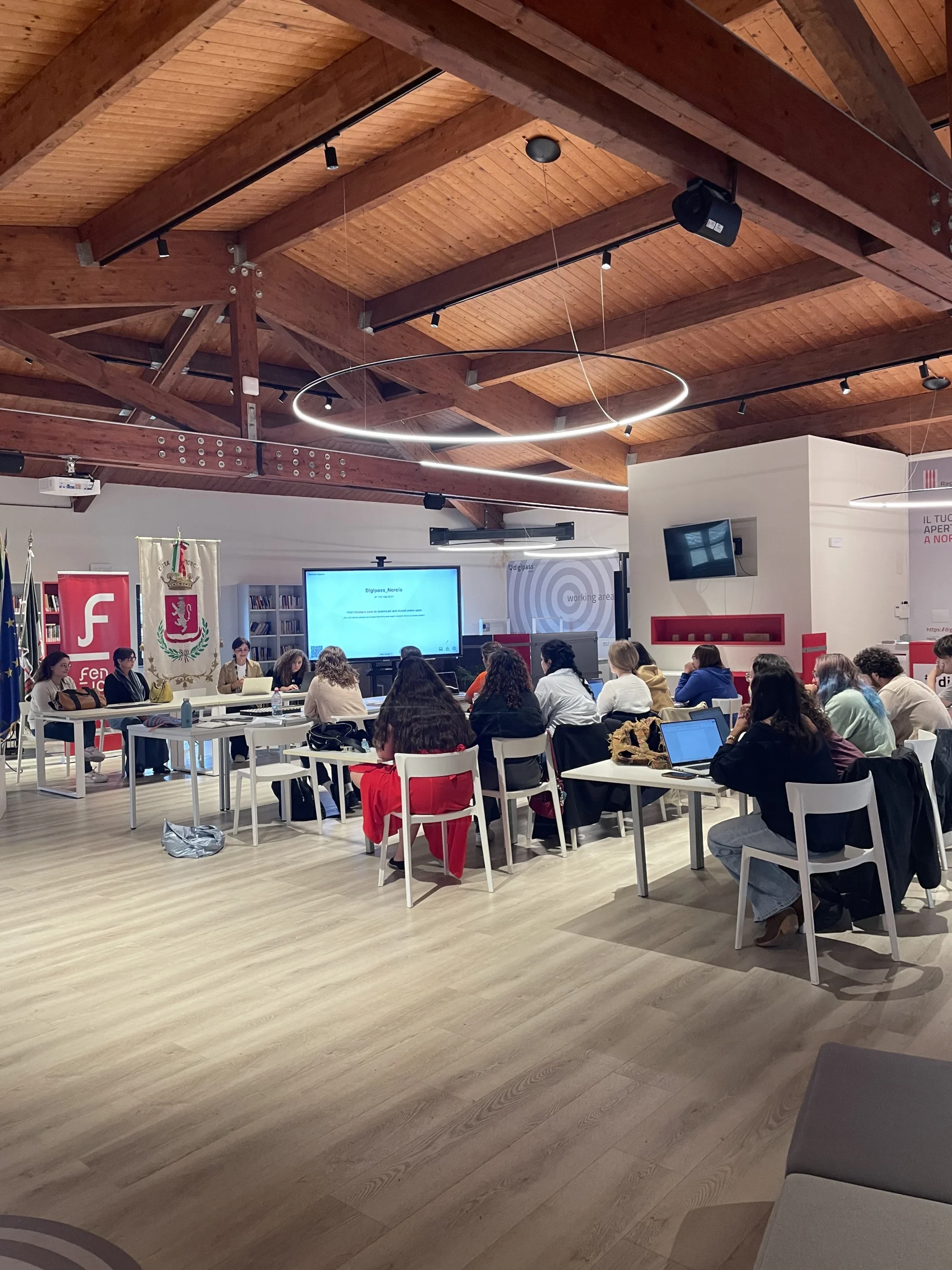
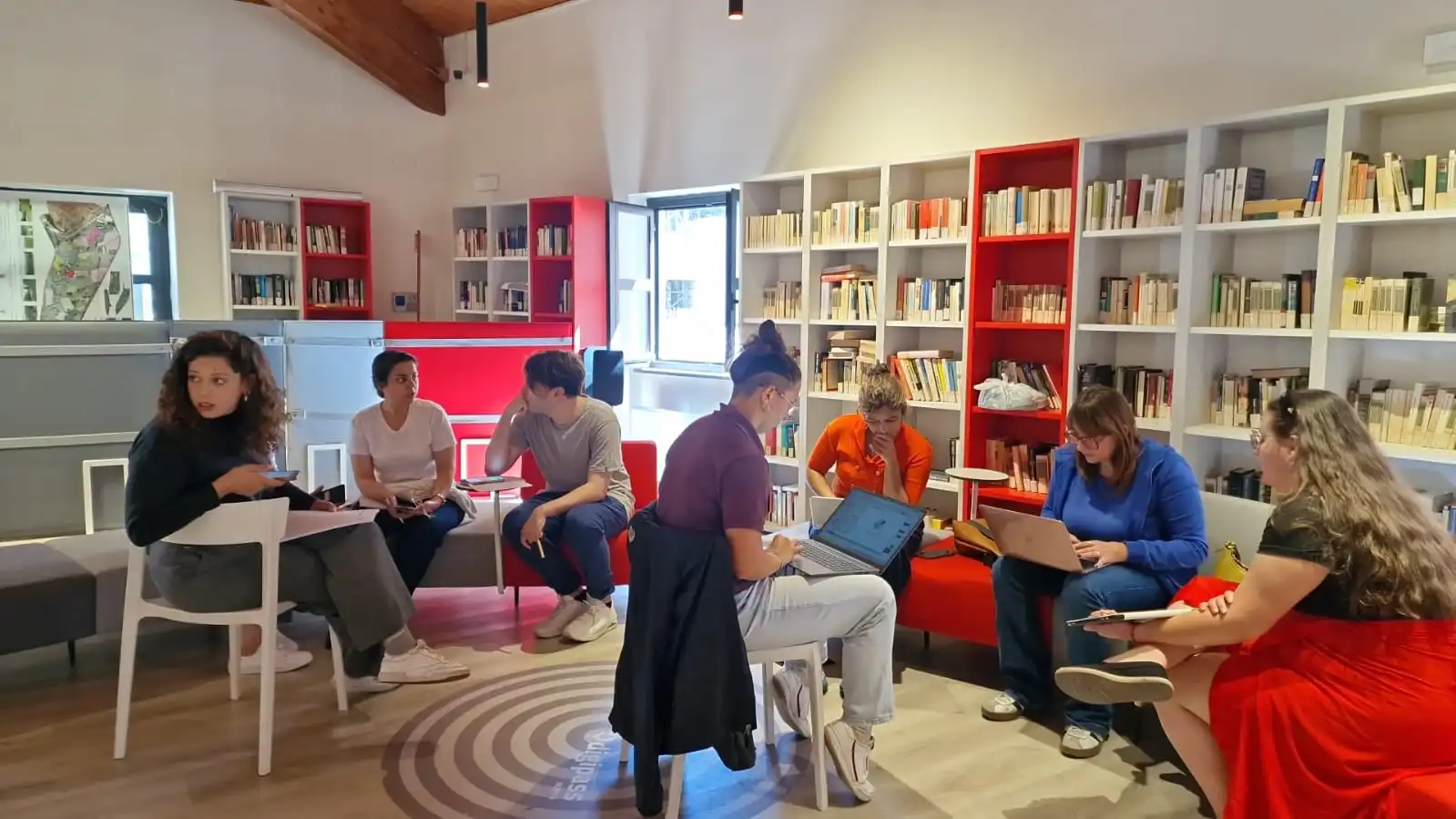
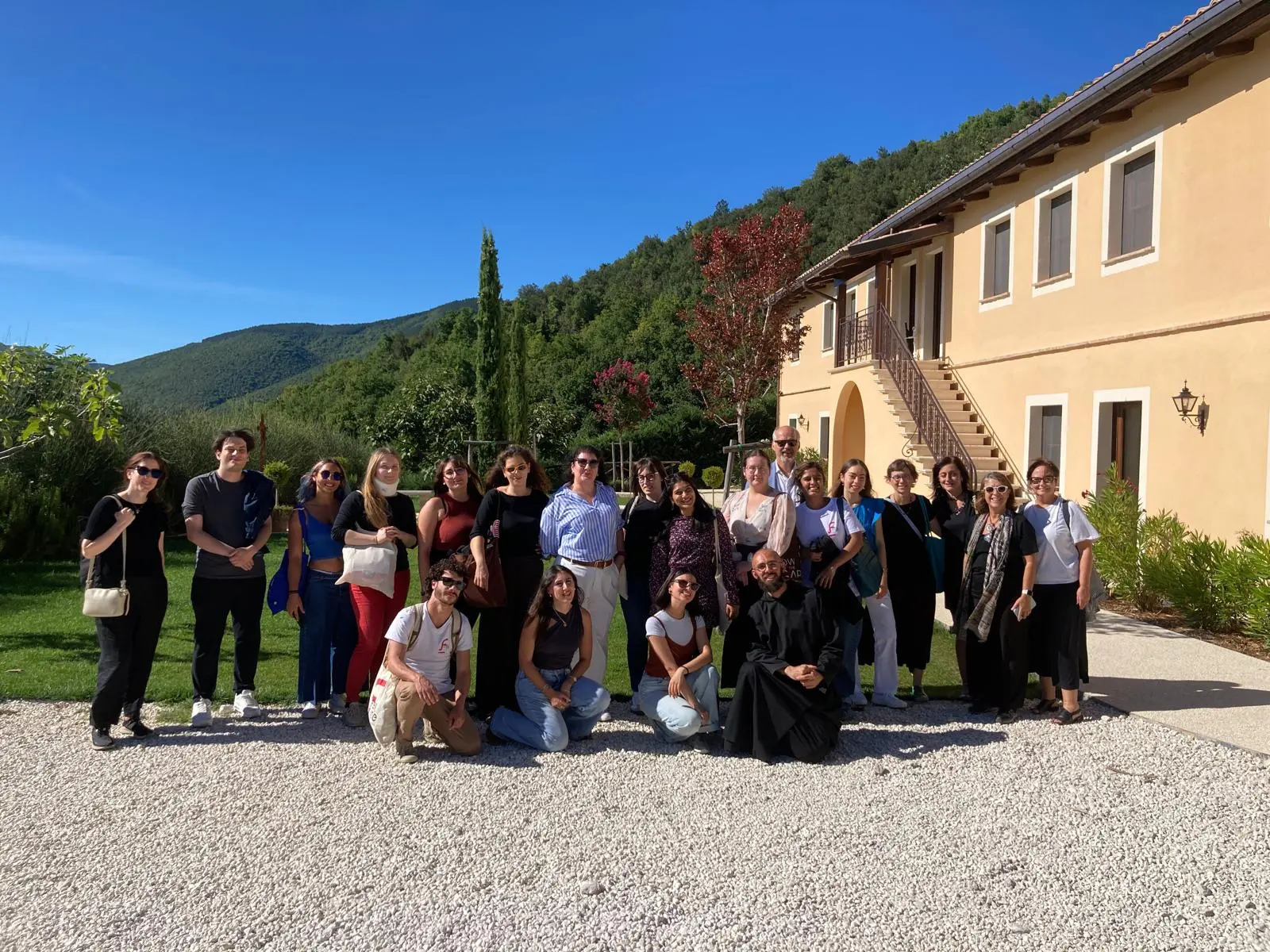
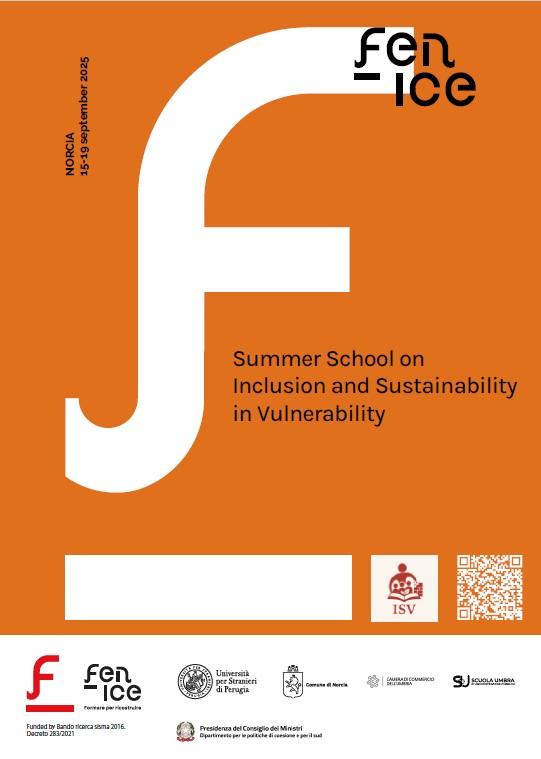
The first edition of the Summer School “Inclusion and Sustainability in Vulnerability (ISV): A Transdisciplinary Approach”, co-organized by the University for Foreigners of Perugia and the HEurope HRJust project (with the University of Bern), was held in Norcia (PG), Italy, from 15 to 19 September 2025.
The five-day program brought together 20 participants with diverse academic backgrounds to explore climate change, human rights, and vulnerability through lectures, workshops, field visits, and group work. Professors included Maura Marchegiani (Perugia), Elisa Fornalé (Bern), Patricia Galvao (UN ILC), and Ester Herlin-Karnell (Gothenburg).
Participation was free of charge, with all costs covered by the organizers. Further details about the program and lecturers remain available at: https://www.unistrapg.it/node/12601
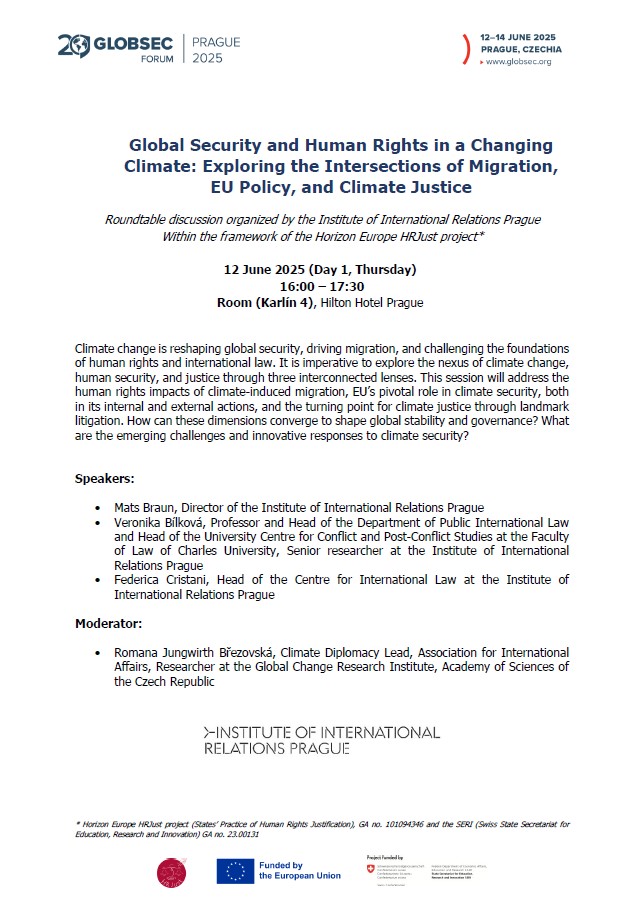
Global Security and Human Rights in a Changing Climate: Exploring the Intersections of Migration, EU Policy, and Climate Justice
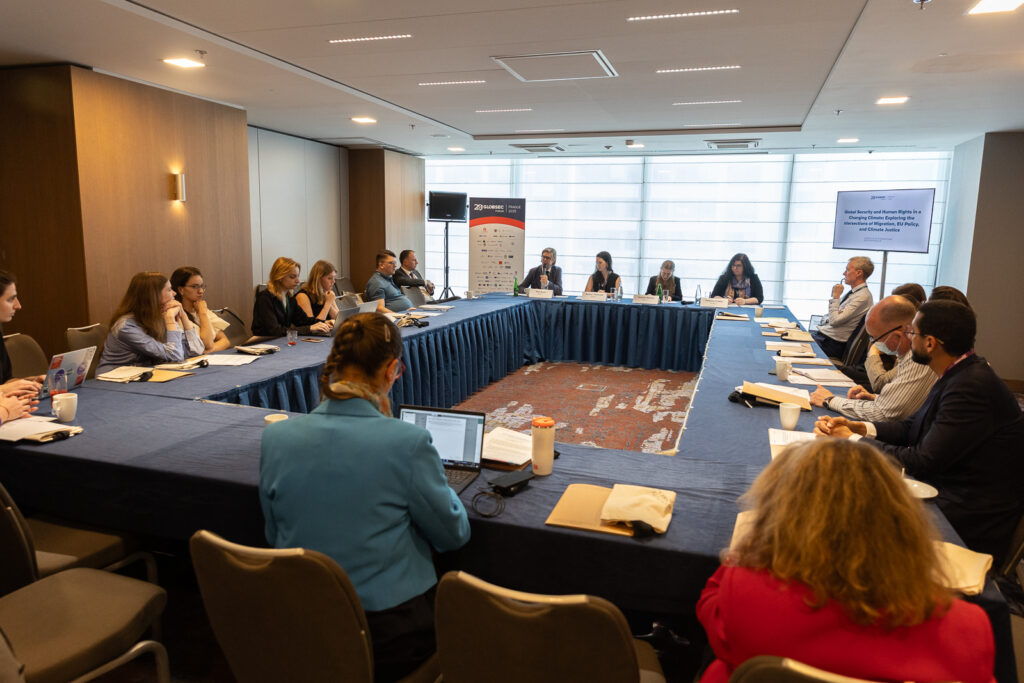
On 12 June 2025, the HRJust IIR team organized a high-level roundtable at the GLOBSEC 2025 Forum in Prague (CZ). Focused on the intersection of climate change, global security, human rights, and migration, with a particular focus on EU policy and international law, the event provided an opportunity to present and discuss key findings from HRJust’s Work Package 6 (WP6) on climate with a diverse array of international stakeholders. By facilitating direct engagement with international stakeholders and institutions, the roundtable exemplified HRJust’s commitment to multinational institutional outreach, effectively bridging the project’s research with global policy conversations.
This roundtable was moderated by the Head of Climate Diplomacy in Association for International Affairs Romana Jungwirth Březovská, and featured IIR Director Mats Braun, IIR senior researcher and Head of the Department of Public International Law at the Faculty of Law of Charles University Prof. Veronika Bílková, and the Head of the Centre for International Law at IIR Federica Cristani.
The panel examined the EU’s global leadership in climate diplomacy, challenges around environmental migration and its legal gaps, and the growing relevance of climate justice. Dr. Braun highlighted the EU’s evolving role in global climate governance and warned against authoritarian responses to environmental crises. Prof. Bílková addressed the complexities of climate-induced displacement, calling for nuanced approaches beyond traditional security or legal frameworks. Dr. Cristani discussed how climate litigation is emerging as a powerful tool for accountability, often led by civil society actors.
The audience engaged actively on issues such as democratic legitimacy, legal innovation, and the future of climate justice in Europe and beyond. For more information on the GLOBSEC Forum 2025: https://forum2025.globsec.org/
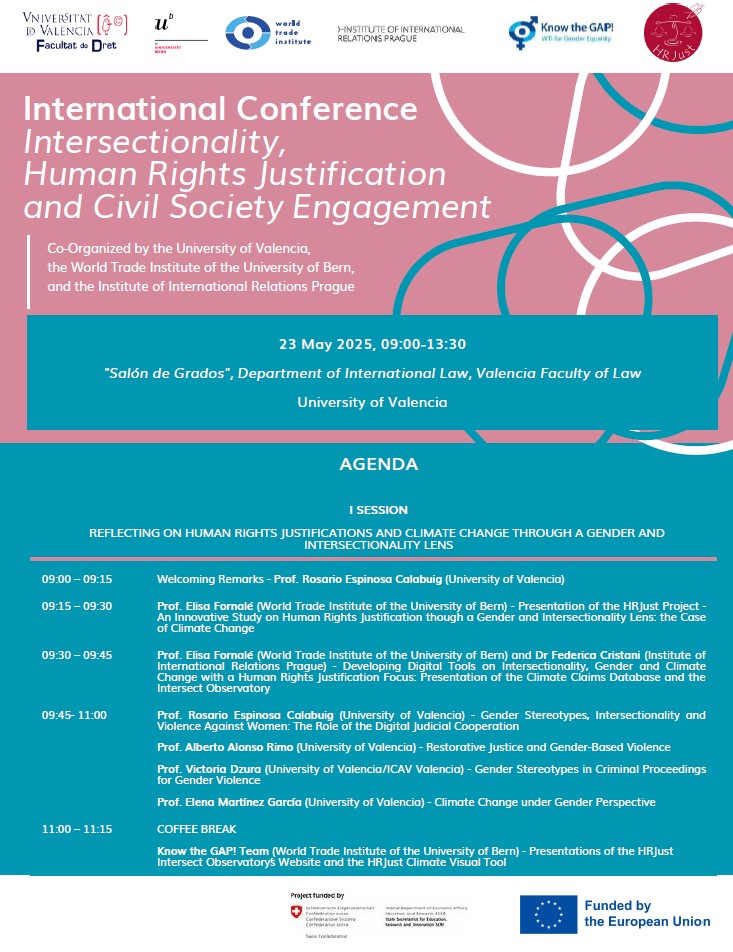
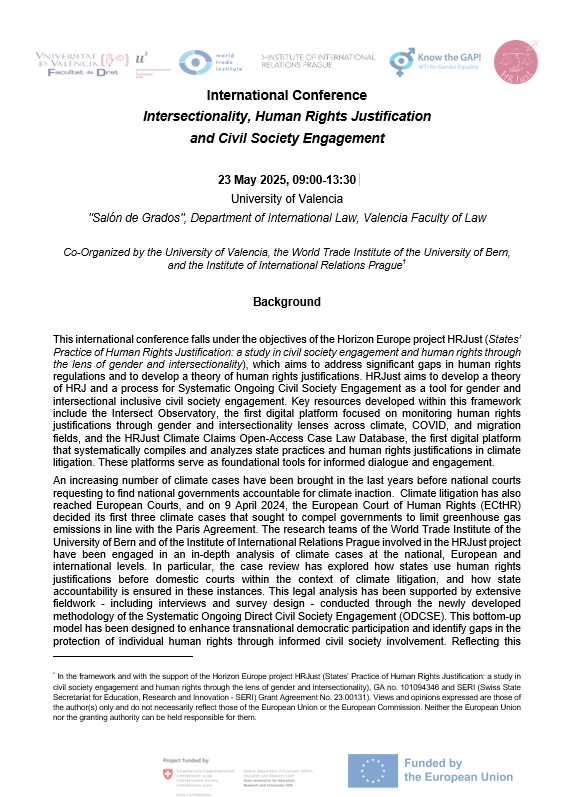
Valencia to Host International Conference on Human Rights, Intersectionality, and Civil Society Engagement
On 23 May 2025, the University of Valencia hosted the international conference “Intersectionality, Human Rights Justification, and Civil Society Engagement,” which brought together scholars, policy experts, and civil society actors. The event took place from 09:00 to 13:30 at the Salón de Grados, Faculty of Law.
The conference introduced key tools developed by the HRJust team, including the Intersect Observatory and the HRJust Climate Claims Open-Access Case Law Database. These platforms aim to track and analyze state practices in climate litigation and human rights justifications, with a strong focus on civil society engagement.
Sessions covered a range of topics, including gender-based violence, climate change, digital rights, and migration. The event also featured a presentation of the Systematic Ongoing Civil Society Engagement methodology, a new approach to integrating civil society in legal and policy processes.
The conference aimed to deepen understanding of how human rights justifications have been used in climate proceedings and to explore new strategies for civil society involvement.
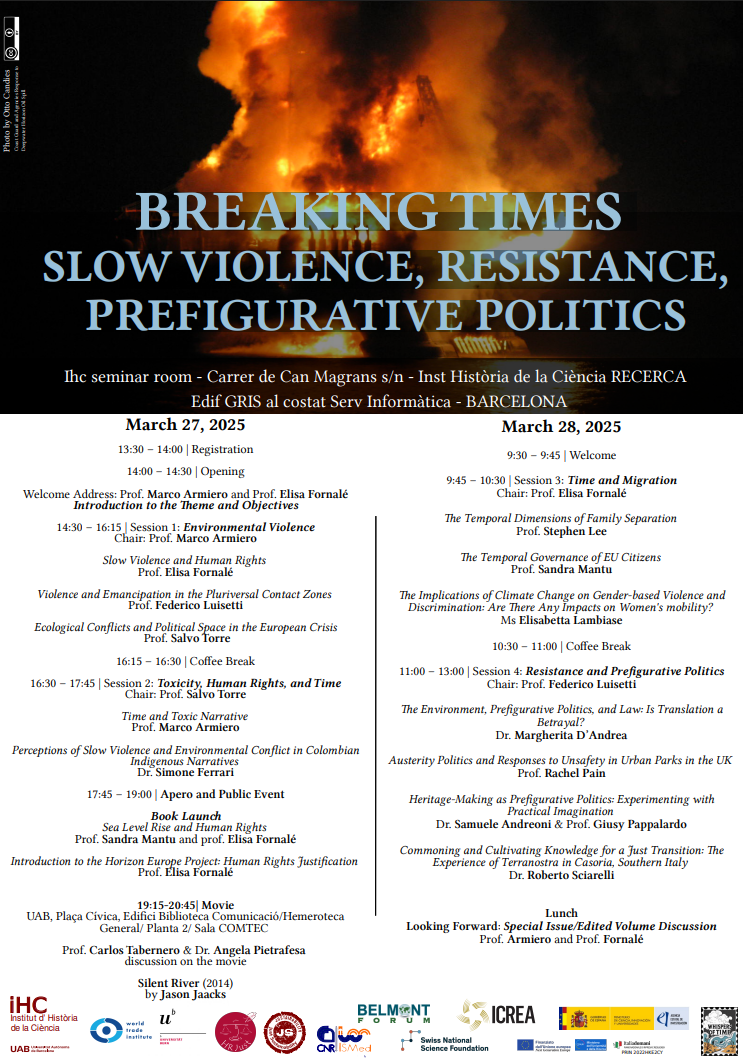
Breaking Times: Slow Violence, Resistance, Prefigurative Politics
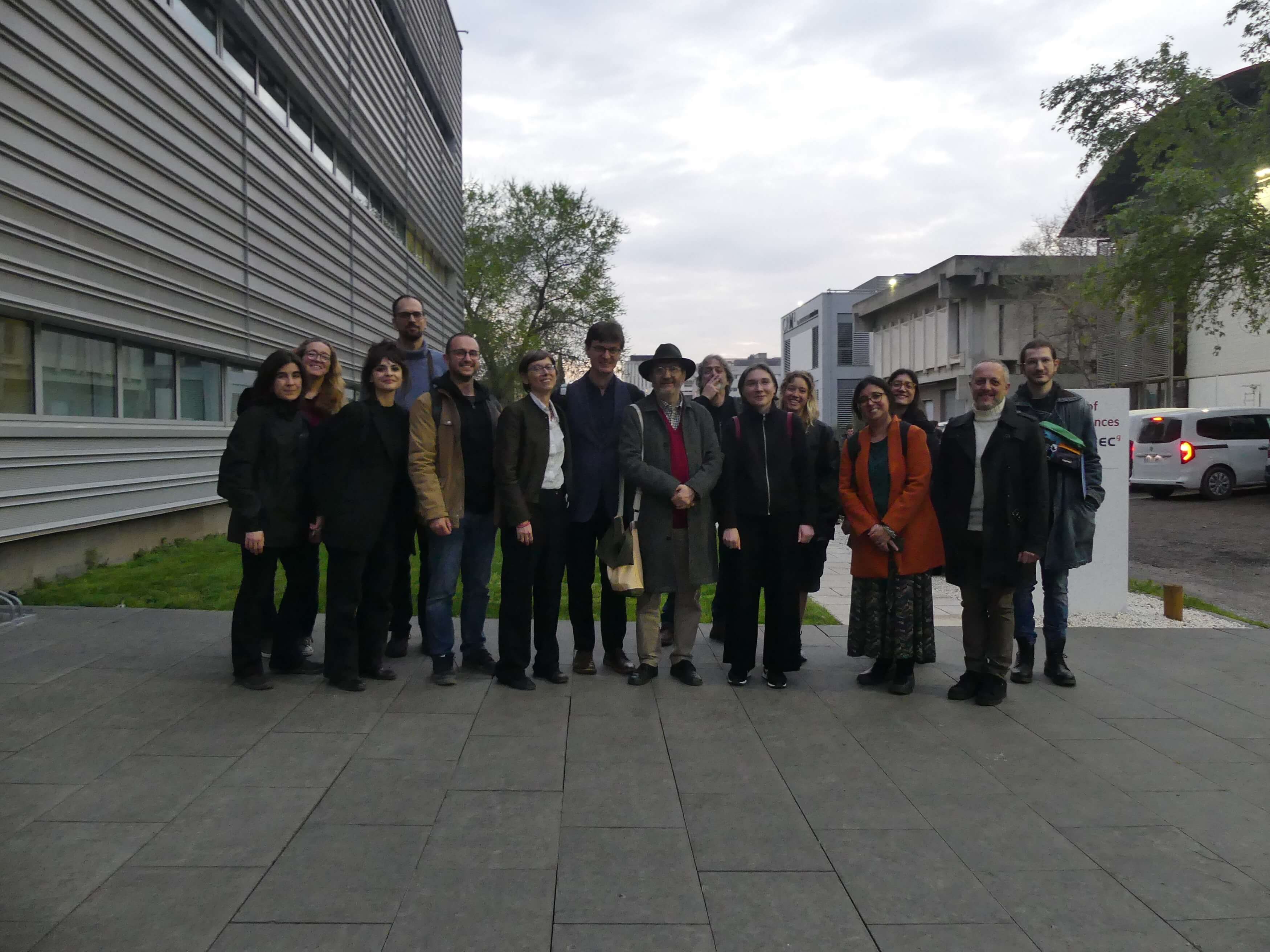
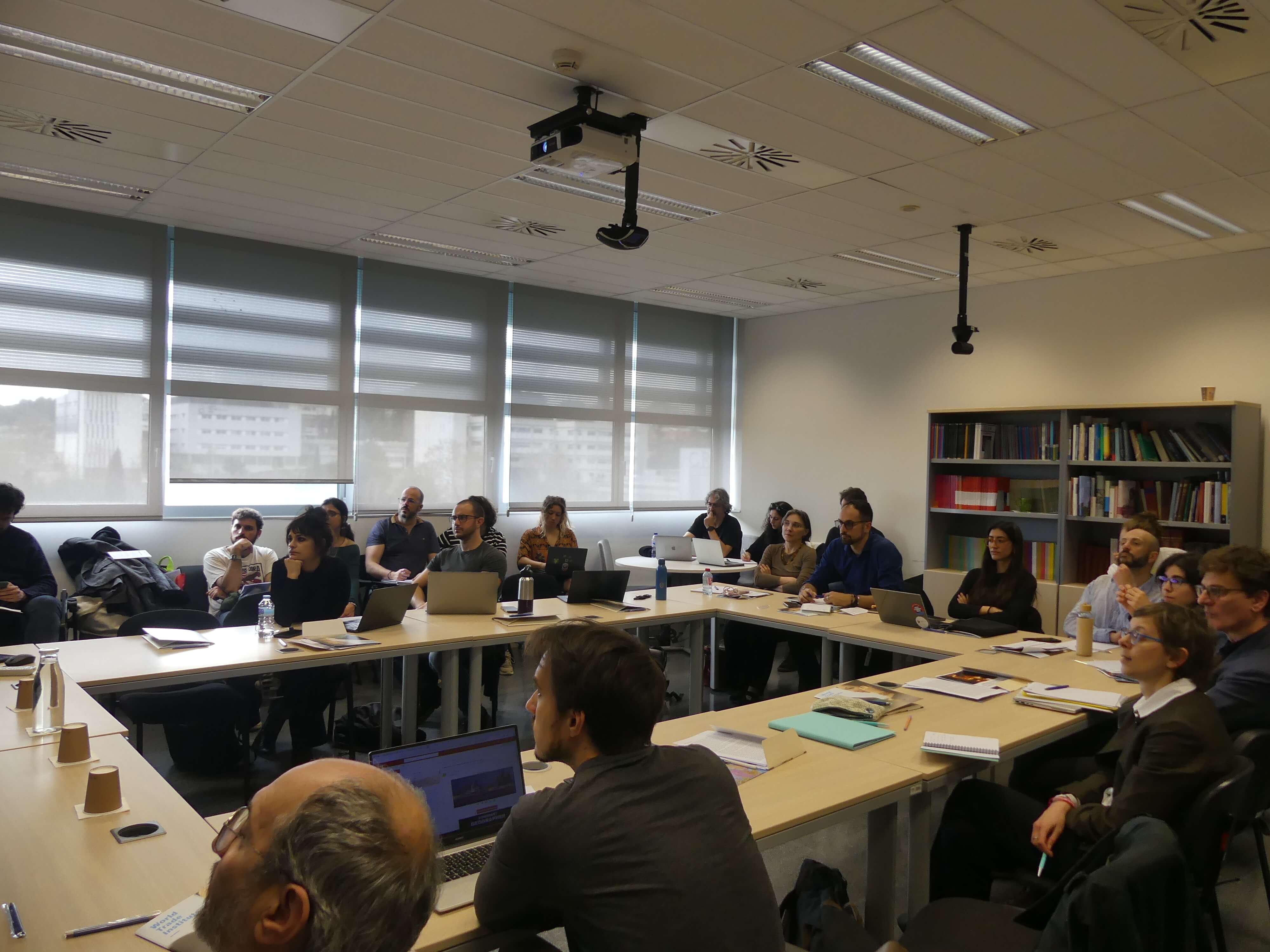
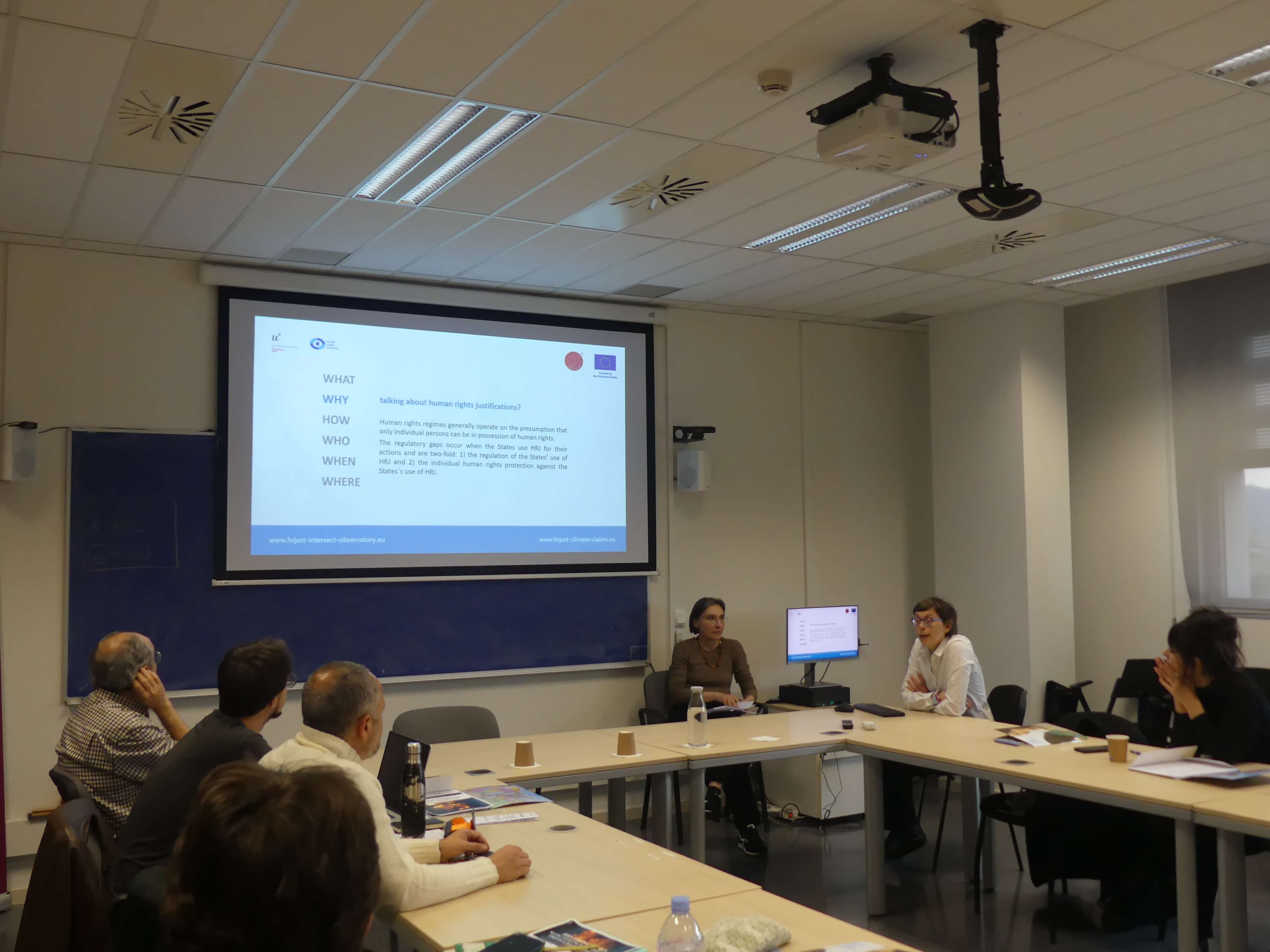
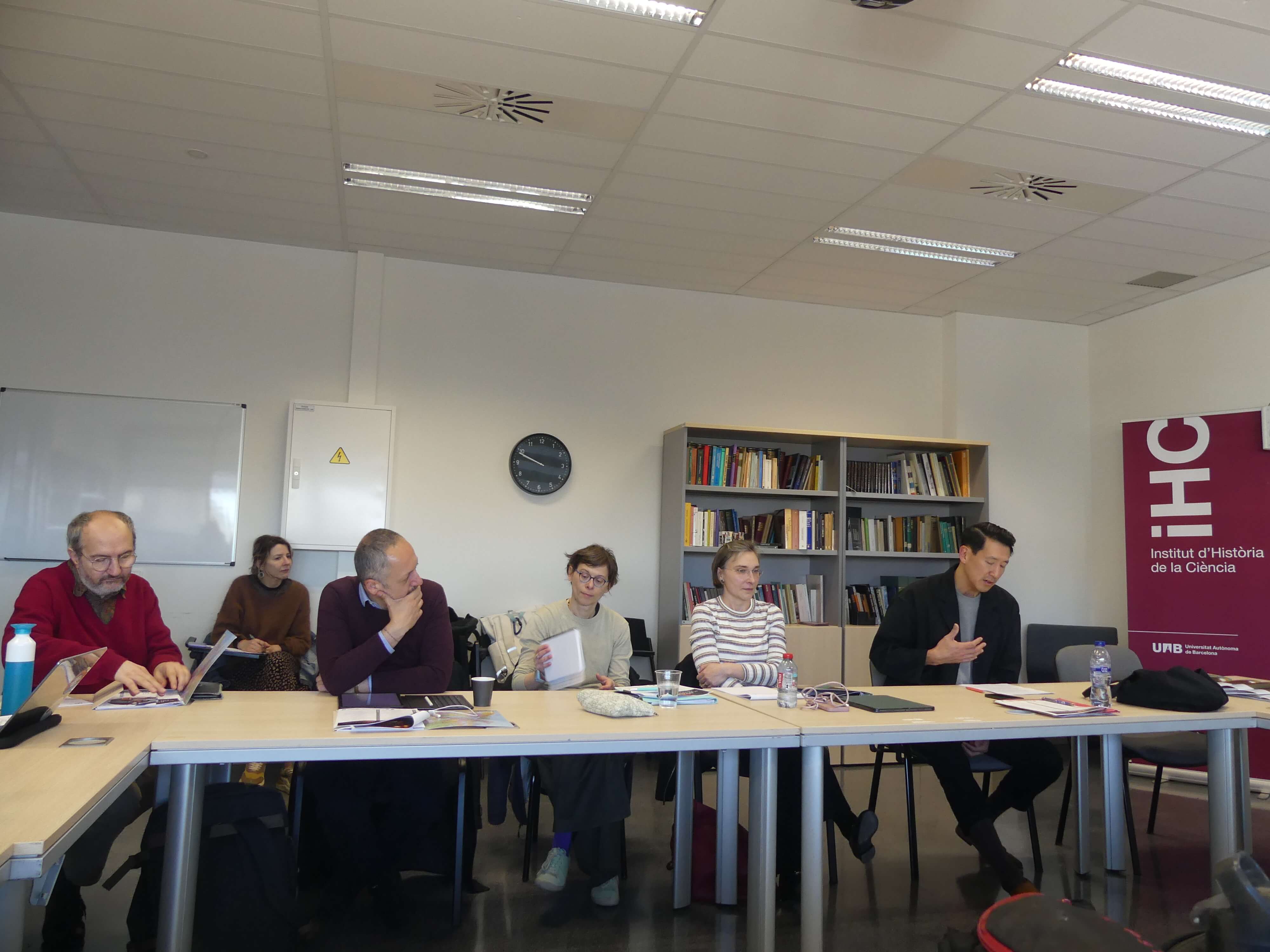
This two-day event, organized by the University of Bern, hosted by Prof. Elisa Fornalé and co-hosted by the Institut d’Història de la Ciència, brings together leading scholars to explore the intersections of environmental violence, human rights, migration, and resistance. Featuring insightful discussions, a book launch, and a film screening, Breaking Times offers a unique space for academics, activists, and policymakers to engage with pressing global challenges.
The HR Just, which has been presented during this event, aims at addressing significant and important gaps in human rights regulations and developing a theory of human rights justifications. Furthermore, the WP6 Climate has been showcased. The Climate Claims visual tool focuses on providing a multilevel analysis of climate litigation, an analysis of typologies of human rights justification and on describing civil society engagement.
On this occasion, the book “Sea Level Rise Implications for Human Rights, Security and Peace” was first introduced.
Insights from the Fieldwork Activities Conducted in the Context of Climate Litigation
On 23 January 2025, the Institute of International Relations Prague hosted the webinar “Insights from the Fieldwork Activities Conducted in the Context of Climate Litigation”, featuring Dr. Petra Ditrichová. This session formed part of the Human Rights Justification: Empirical Webinar Series, which is organized within the framework of the HRJust WP7 (Empirical – cross-cutting) activities. The event focused on sharing preliminary findings from an extensive empirical research project conducted under the EU-funded HRJust initiative, which explores how states employ human rights arguments in climate-related legal and policy responses.
During the webinar, Dr. Ditrichová presented key insights from interviews with over 40 individuals, ranging from policymakers and judges to academics and NGO representatives, who are actively involved in climate adjudication, regulation, and advocacy. The discussion highlighted both the potential and the limitations of invoking human rights in climate litigation, offering a critical look at emerging legal narratives and their practical implications. The event provided an invaluable opportunity for participants to reflect on the complexities and strategic considerations of using human rights justifications to advance climate action.
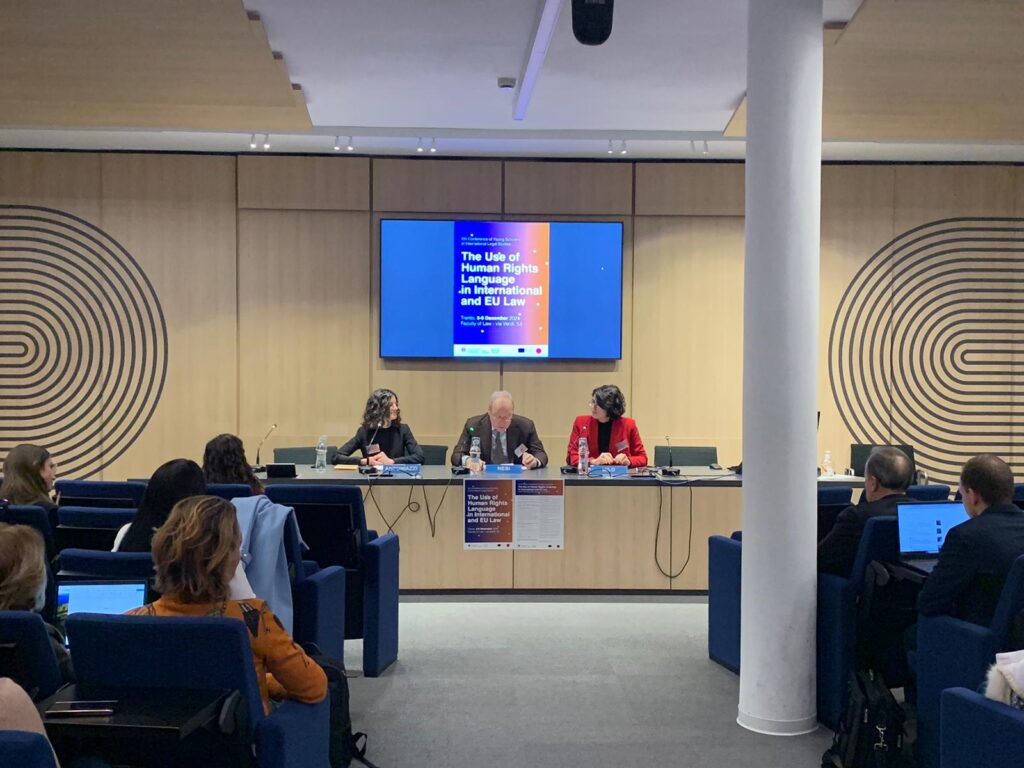
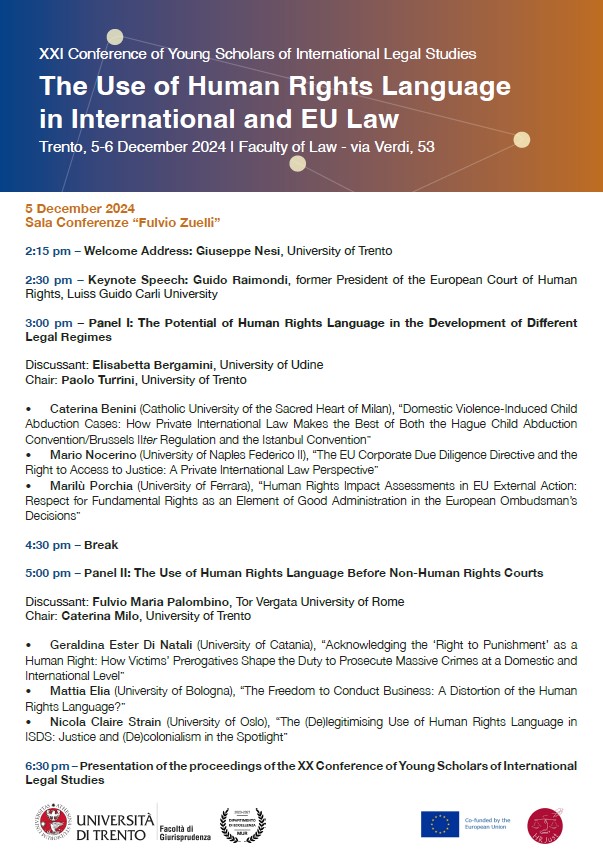
XXI Conference of Young Scholars of International Legal Studies
Over the last decades, human rights have progressively informed the international and EU legal debate. Notwithstanding waves of political pushback and doctrinal contestation, leading to talks of a ‘post-human rights era’, human rights today appear more alive than ever.
The Use of Human Rights Language in International and EU Law : the title of the Conference purposefully refers to broad concepts such as ‘use’ and ‘language’ to capture the pervasiveness of human rights in all its ramifications. The complex nature of the use of human rights language is apparent not only in the many forms that it may take but also in the actors behind it and the objectives that they pursue. Furthermore, the Conference aims to discuss the effects, both in law and in practice, of the use of human rights language. Indeed, whether the widespread use of human rights language in international and EU law can represent a lodestar for cross-fertilization among legal sectors may be questioned.
Broader legitimacy questions also arise. Is the language of human rights fully a language of empowerment for disenfranchised individuals and communities, or is it still rooted in Western and hegemonic conceptions? Can new uses of human rights language result in abuses, distorting human rights’ essence, and are there any remedies against such potential abuses?
The Conference witnessed the contributions from several young scholars of international legal studies, with inputs from senior legal scholars as discussants and a keynote speech by Professor Guido Raimondi, former President of the European Court of Human Rights.
28th Ius Commune Conference
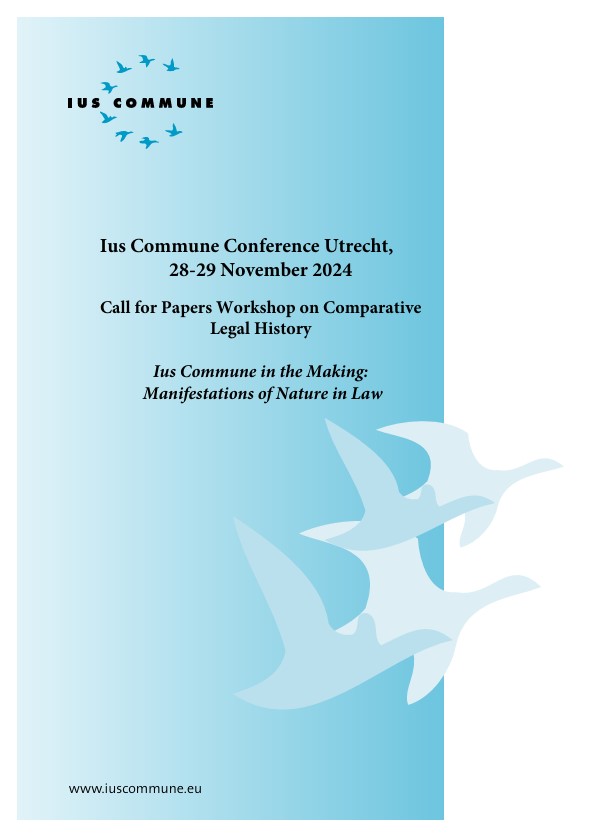
Prof. Elisa Fornalé (UNIBE) and Dr. Federica Cristani (IIR) participated at the Workshop on "Climate Change Litigation: International Legal Perspectives" within the framework of the Ius Commune Conference 2024 that was organized by Maastricht University, Utrecht University and KU Leuven and held in Utrecht (The Netherlands) on 29 November 2024.
Their presentation on "Climate litigation on the rise: (Re)building a (new) role for actors? A first reflection from the civil society engagement exercise" offered an overview of the first results from the civil society engagement activities conducted within WP6, sharing first analyisis from the data collection of climate litigation cases, as well as from the first workshop with civil society and the fieldwork activities conduced during 2024 by the UNIBE and IIR teams.
The workshop was an important opporunity for sharing resuls, gather feedback from experts in the field and continuing a constructive dialogue on the topics at stake.
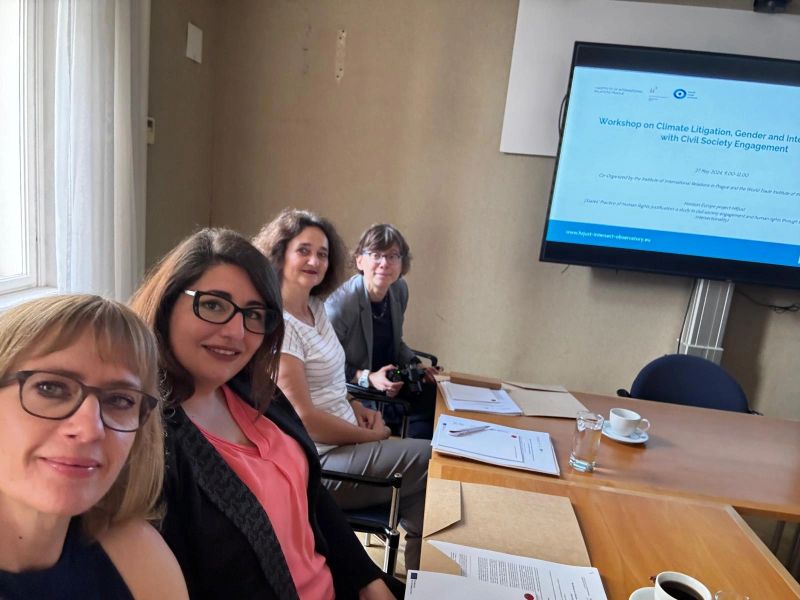
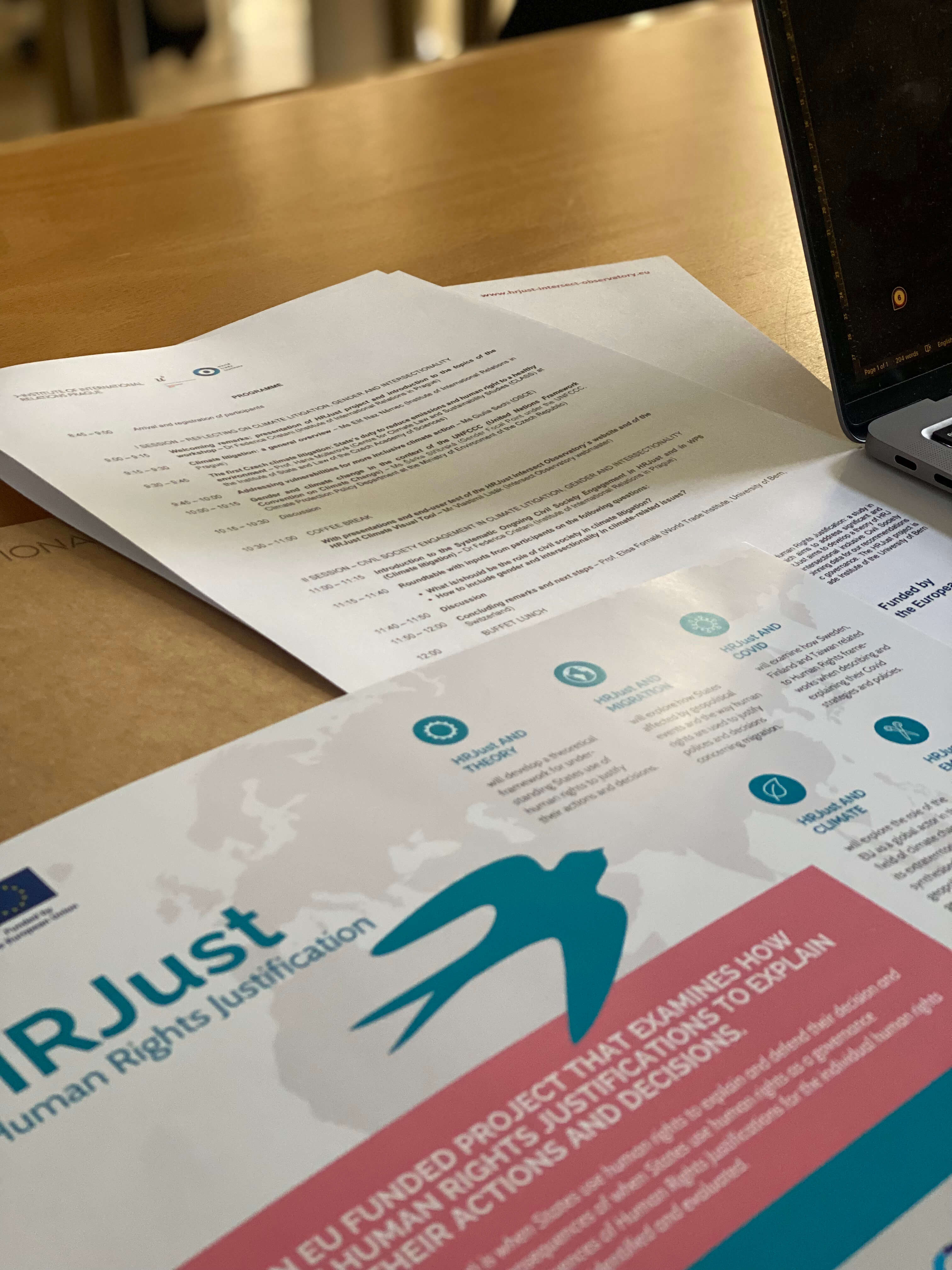
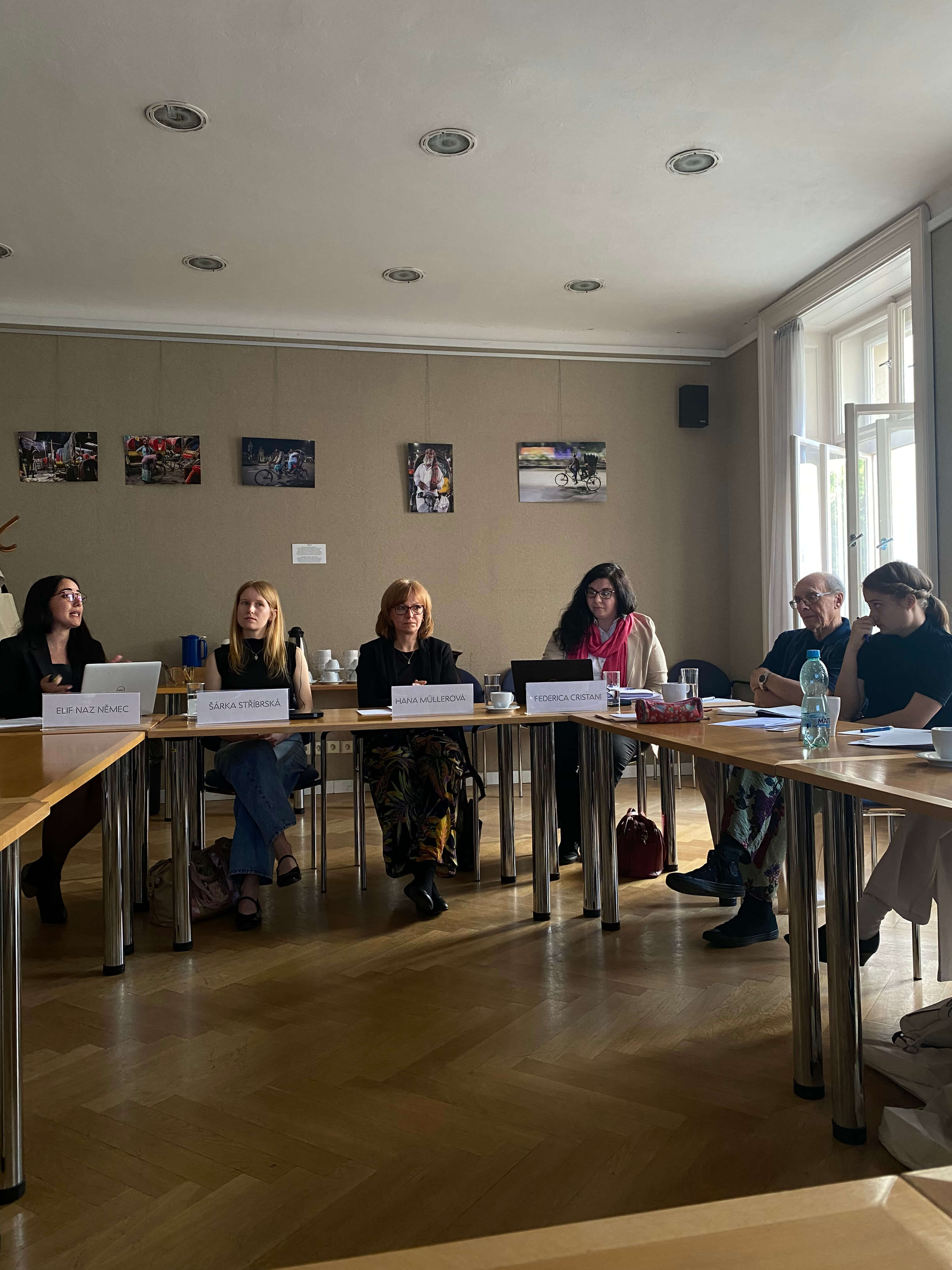
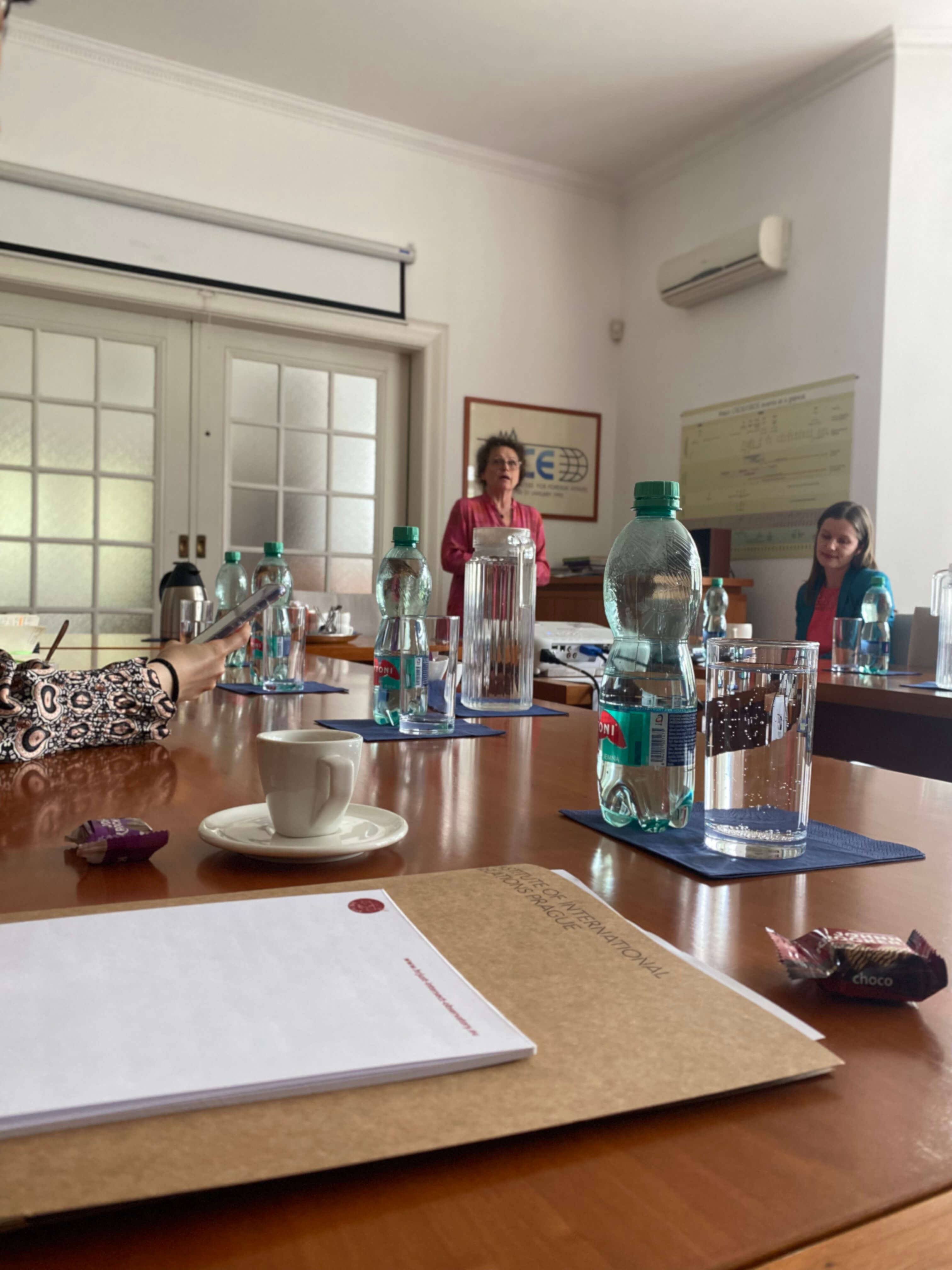
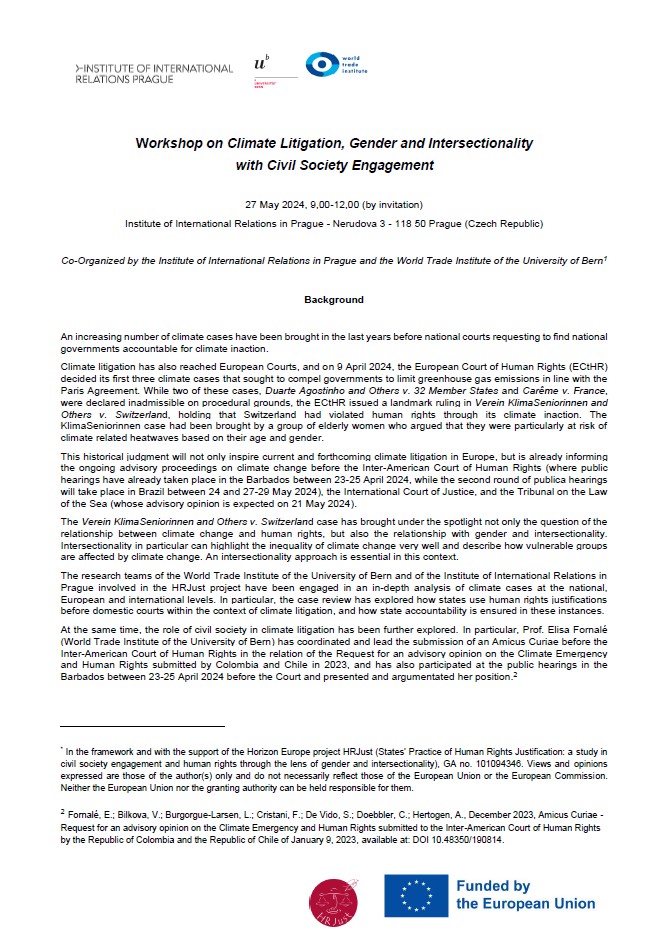
Workshop on Climate Litigation, Gender and Intersectionality with Civil Society Engagement
On May 27th, the HRJust project hosted a dynamic workshop bringing together academics, policy makers, representatives from international organizations, and civil society actors to discuss the evolving landscape of climate litigation. The event focused on the intersection of climate justice, gender equality, human rights, and the growing role of civil society in holding governments accountable for climate inaction.
Participants reflected on the implications of the Verein KlimaSeniorinnen and Others v. Switzerland ruling by the European Court of Human Rights and examined how human rights justifications are used in climate proceedings across national and international courts. The workshop also shared preliminary findings from the HRJust project, including insights into intersectionality and strategies to enhance democratic participation in climate action.
The outcomes of this exchange will contribute to ongoing research and shape the next steps of the HRJust project, including a follow-up workshop planned for late 2024 / early 2025.
International Women's Day
SNSF Professor Dr. Elisa Fornalé, spoke at the international study conference on the occasion of International Women's Day on 8 March 2023, held in the University of Salerno.

